

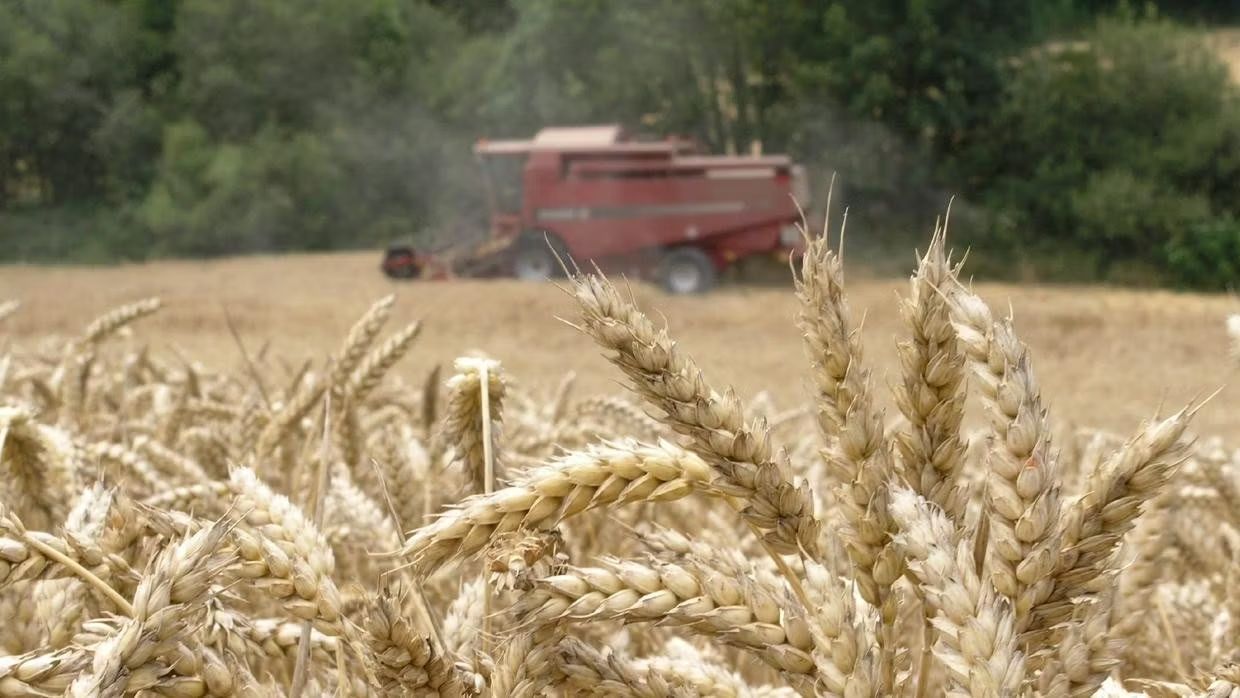
Una cosechadora de trigo worked the golden fields under a tense horizon, its mechanical hum a stark contrast to the heavy silence that would soon fall over the regional governance of Castilla-La Mancha. The agricultural landscape, usually a testament to resilience and productivity, became the backdrop for a dramatic institutional showdown. This Monday, the powerful agricultural association ASAJA Castilla-La Mancha made a decisive and unprecedented move, choosing to walk out of the Advisory Council for the Environment (CAMA). Their departure was not a mere protest but a formal rejection of the regional government’s legislative agenda, specifically the proposed modification of the Forest Law and Sustainable Forest Management, which they deem a direct threat to the very essence of agricultural activity.
The crisis was precipitated by the refusal of the regional government, led by the Partido Popular, to delay the discussion of the proposed law. ASAJA had formally requested that the item be removed from the agenda of the CAMA meeting, arguing that the modification was being rushed through «precipitately» and without prior, meaningful consultation with the agricultural sector. The leadership of the organization, headed by its president José María Fresneda and vice president Juan José Laso, viewed the government’s insistence on proceeding as a dismissal of their concerns. Their physical exit from the council chamber was a powerful symbol of this breakdown in dialogue, marking a new chapter in an already strained relationship between the farmers and the regional executive.
La Justificación Estatal que Cuestiona ASAJA
At the heart of the conflict lies a fundamental disagreement over the legal justification for the proposed changes. The regional government points to the national Forest Law, which was modified in 2022, as the basis for its own legislative update. However, José María Fresneda has strongly contested this reasoning. He argues that the national law, amended over two years ago, does not impose any new or recent requirement that would compel Castilla-La Mancha to act with such urgency. In his view, the regional executive is using an outdated mandate as a pretext to introduce measures that go far beyond what the state legislation demands.
The core of ASAJA’s technical argument is that the proposed regional law introduces, for the first time in Spain, an explicit and automatic prohibition of agricultural work—including harvesting—when the Potential Propagation Index (IPP) reaches orange or red levels. The association contends that the 2022 state reform explicitly delegated to each autonomous community the responsibility of developing its own regional prevention plans to determine specific limitations and permitted activities. Therefore, ASAJA asserts that decisions regarding agricultural campaigns should be made within these tailored regional frameworks, not through a blanket legal prohibition that ignores the specific needs and characteristics of farming.
El Desafío de las Restricciones al Campo y el Debate sobre el IPP
This legislative battle is inseparable from the immediate, practical pressures faced by farmers. For weeks, ASAJA has been in a heated confrontation with the government over existing restrictions on agricultural work during days with high IPP levels. The association has been vocal about the negative impact of these measures, which they see as disproportionately punitive. The debate intensified with the statements of the Sustainable Development Minister, Mercedes Gómez, who insisted that the government does not intend to impose additional measures beyond those already applied during the current campaign. She maintained that the proposed restrictions are essentially the «same words, points, and commas» as the current order, and that farmers in provinces like Guadalajara and Cuenca can still submit a responsible declaration to harvest during high-risk periods, except during the central hours of the day.
However, ASAJA’s calculations presented a grim alternative. They estimated that if the conditions now proposed by the Junta had been in effect during the previous harvest season, farmers would have been severely limited in their ability to complete their work. This stark scenario highlights the deep-seated fear within the agricultural community: that the combination of bureaucratic hurdles and stringent environmental regulations is placing the farmer directly «in the crosshairs,» as Fresneda stated, threatening the viability of their livelihoods and the region’s food production capacity. The walkout from the CAMA is thus a dramatic escalation in a broader struggle for the future of agriculture in the face of environmental and climatic challenges.
The situation remains at a critical juncture. The Junta’s determination to push forward with the legislative modification, despite the sector’s strongest opposition, signals a firm commitment to its environmental agenda. Meanwhile, ASAJA’s withdrawal from the advisory body represents a profound breakdown in consensus and a clear warning of the social friction that such policies can generate. The coming weeks will be crucial, as the agricultural community watches closely to see whether the government will reconsider its approach or continue down a path that many in the sector believe ignores their fundamental role and concerns. The debate extends beyond a single law; it is a confrontation over the balance between environmental protection and agricultural sustainability, a balance that will define the rural landscape of Castilla-La Mancha for years to come.